Friday, April 5, 2019

Winston Churchill

Today in history - April 5th, 1955 - Winston Churchill resigns.  Here are 10 books on Winston Churchill. 

Churchill and Sea Power by Christopher M. Bell - Winston Churchill had a longer and closer relationship with the Royal Navy than any British statesman in modern times, but his record as a naval strategist and custodian of the nation's sea power has been mired in controversy since the ill-fated Dardanelles campaign in 1915. Today, Churchill is regarded by many as an inept strategist who interfered in naval operations and often overrode his professional advisers - with inevitably disastrous results. Churchill and Sea Power is the first major study of Winston Churchill's record as a naval strategist and his impact as the most prominent guardian of Britain's sea power in the modern era. Based on extensive archival research, the book debunks many popular and well-entrenched myths surrounding controversial episodes in both World Wars, including the Dardanelles disaster, the Norwegian Campaign, the Battle of the Atlantic, and the devastating loss of the Prince of Wales and Repulse in 1941. It shows that many common criticisms of Churchill have been exaggerated, but also that some of his mistakes have been largely overlooked - such as his willingness to prolong the Battle of the Atlantic in order to concentrate resources on the bombing campaign against Nazi Germany.The book also examines Churchill's evolution as a maritime strategist over the course of his career, and documents his critical part in managing Britain's naval decline during the first half of the twentieth century. Churchill's genuine affection for the Royal Navy has often distracted attention from the fact that his views on sea power were pragmatic and unsentimental. For, as Christopher M. Bell shows, in a period dominated by declining resources, global threats, and rapid technological change, it was increasingly air rather than sea power that Churchill looked to as the foundation of Britain's security.

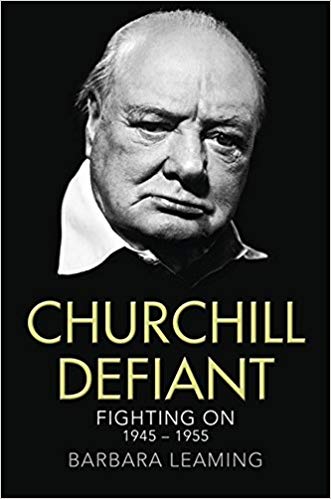
Churchill Defiant: Fighting On, 1945-1955 by Barbara Leaming - Winston Churchill rages against time and his own mortality in this tumultuous political drama of his last ten years of public life. Here is Churchill at his most outrageous, maddening, and devious; but also at his most human, courageous, and defiant. "I am an obstinate pig." This was how Winston Churchill described himself. At the end of July 1945, Winston Churchill was a defeated man hurled from power by the British people at the end of the war in which he had just saved his country. Churchill Defiant is the story of how, when it seemed impossible, Churchill fought his way back over the next six years to the center of great events, the only place he ever wanted to be. In 1951, at last prime minister once more, he was ready to begin his dash to win "the last prize I seek": the enduring peace that had eluded the world after Hitler's defeat. But Churchill's battles were just beginning. He would have to wage war with both his closest colleagues and his most indispensable allies, the Americans, to get where none of them wanted him to go: the negotiating table with the Soviets. Barbara Leaming has written a gripping, fast-paced narrative of bare-knuckle politics, of life-and-death decisions, of old grudges and fresh blame. It is the story of how, between 1945 and 1955, Churchill simultaneously fought to prevent a third world war and to defy his own mortality as the clock ticked away and time threatened to run out for him. This is Winston Churchill in close-up, a compelling, vivid, and deeply poignant portrait of the great man at a time when almost no one wanted him to remain on the public stage and when he was willing to do absolutely anything to stay there.

The Churchill Factor: How One Man Made History by Boris Johnson - Fearless on the battlefield, Churchill had to be ordered by the king to stay out of action on D-Day; he pioneered aerial bombing and few could match his experience in organizing violence on a colossal scale, yet he hated war and scorned politicians who had not experienced its horrors. He was the most famous journalist of his time and perhaps the greatest orator of all time, despite a lisp and chronic depression he kept at bay by painting. His maneuvering positioned America for entry into World War II, even as it ushered in England's post-war decline. His openmindedness made him a trailblazer in health care, education, and social welfare, though he remained incorrigibly politically incorrect. Most of all, he was a rebuttal to the idea that history is the story of vast and impersonal forces; he is proof that one person--intrepid, ingenious, determined--can make all the difference.

Churchill Style: The Art of Being Winston Churchill by Barry Singer - One of the most iconic and endlessly fascinating figures of the 20th century, Winston Churchill has been the subject of any number of books, but none of them have analyzed his lifestyle as a way to really understand the man. This book features a vivid and entertaining timeline of his public history, but also focuses on the more personal, non-work aspects of his day-to-day life, covering topics such as autos, books, cigars, dining, fashion, home, libations, and pastimes. Churchill lived an extravagant life, but in reality did not have much money. His ability to live well beyond his means is a lesson that will intrigue many. Despite the hundreds of books written on the wartime leader, there has been surprisingly little compiled on his lifestyle. Barry Singer--a writer, self-described Churchill fanatic and proprietor of Manhattan's Chartwell Booksellers (which touts itself as "the world's only Winston Churchill bookshop")--has corrected the deficit. In brief, Churchill lived beyond his means and appears to have enjoyed every minute of it. Churchill Style puts on display his resourcefulness at doing it.

Churchill: Walking With Destiny by Andrew Roberts - When we seek an example of great leaders with unalloyed courage, the person who comes to mind is Winston Churchill: the iconic, visionary war leader immune from the consensus of the day, who stood firmly for his beliefs when everyone doubted him. But how did young Winston become Churchill? What gave him the strength to take on the superior force of Nazi Germany when bombs rained on London and so many others had caved? In Churchill, Andrew Roberts gives readers the full and definitive Winston Churchill, from birth to lasting legacy, as personally revealing as it is compulsively readable. Roberts gained exclusive access to extensive new material: transcripts of War Cabinet meetings, diaries, letters and unpublished memoirs from Churchill's contemporaries. The Royal Family permitted Roberts--in a first for a Churchill biographer--to read the detailed notes taken by King George VI in his diary after his weekly meetings with Churchill during World War II. This treasure trove of access allows Roberts to understand the man in revelatory new ways, and to identify the hidden forces fueling Churchill's legendary drive. We think of Churchill as a hero who saved civilization from the evils of Nazism and warned of the grave crimes of Soviet communism, but Roberts's masterwork reveals that he has as much to teach us about the challenges leaders face today--and the fundamental values of courage, tenacity, leadership and moral conviction.

Churchill's Secret War: The British Empire and the Ravaging of India During World War II by Madhusree Mukerjee - A dogged enemy of Hitler, resolute ally of the Americans, and inspiring leader through World War II, Winston Churchill is venerated as one of the truly great statesmen of the last century. But while he has been widely extolled for his achievements, parts of Churchill's record have gone woefully unexamined.   As journalist Madhusree Mukerjee reveals, at the same time that Churchill brilliantly opposed the barbarism of the Nazis, he governed India with a fierce resolve to crush its freedom movement and a profound contempt for native lives. A series of Churchill's decisions between 1940 and 1944 directly and inevitably led to the deaths of some three million Indians. The streets of eastern Indian cities were lined with corpses, yet instead of sending emergency food shipments Churchill used the wheat and ships at his disposal to build stockpiles for feeding postwar Britain and Europe. Combining meticulous research with a vivid narrative, and riveting accounts of personality and policy clashes within and without the British War Cabinet, 'Churchill's Secret War' places this oft-overlooked tragedy into the larger context of World War II, India's fight for freedom, and Churchill's enduring legacy. Winston Churchill may have found victory in Europe, but, as this groundbreaking historical investigation reveals, his mismanagement-facilitated by dubious advice from scientist and eugenicist Lord Cherwell-devastated India and set the stage for the massive bloodletting that accompanied independence.

The Churchills: In Love and War by Mary S. Lovell - The first Duke of Marlborough (1650-1722) was a soldier of such genius that a lavish palace, Blenheim, was built to honor his triumphs. Succeeding generations of Churchills sometimes achieved distinction but also included profligates and womanizers, and were saddled with the ruinous upkeep of Blenheim. The family fortunes were revived in the nineteenth century by the huge dowries of New York society beauties Jennie Jerome (Winston's mother) and Consuelo Vanderbilt (wife to Winston's cousin).
Mary S. Lovell brilliantly recounts the triumphant political and military campaigns, the construction of great houses, the domestic tragedies, and the happy marriage of Winston to Clementine Hosier set against the disastrous unions of most of his family, which ended in venereal disease, papal annulment, clinical depression, and adultery.
The Churchills were an extraordinary family: ambitious, impecunious, impulsive, brave, and arrogant. Winston--recently voted "The Greatest Briton"--dominates them all. His failures and triumphs are revealed in the context of a poignant and sometimes tragic private life.

The Last Lion: Winston Spencer Churchill: Defender of the Realm, 1940-1965 by William Manchester and Paul Reid - Spanning the years 1940 to 1965, Defender of the Realm, the third volume of William Manchester's The Last Lion, picks up shortly after Winston Churchill became prime minister--when his tiny island nation stood alone against the overwhelming might of Nazi Germany. The Churchill portrayed by Manchester and Reid is a man of indomitable courage, lightning-fast intellect, and an irresistible will to action. This volume brilliantly recounts how Churchill organized his nation's military response and defense, compelled President Roosevelt to support America's beleaguered cousins, and personified the "never surrender" ethos that helped the Allies win the war, while at the same time adapting himself and his country to the inevitable shift of world power from the British Empire to the United States. More than twenty years in the making, The Last Lion presents a revelatory and unparalleled portrait of this brilliant, flawed, and dynamic leader. This is popular history at its most stirring.

Never Surrender: Winston Churchill and Britain's Decision to Fight Nazi Germany in the Fateful Summer of 1940 by John Kelly - A remarkably vivid account of a key moment in Western history: The critical six months in 1940 when Winston Churchill debated whether the British would fight Hitler.
London in April, 1940, was a place of great fear and conflict. Everyone was on edge; civilization itself seemed imperiled. The Germans are marching. They have taken Poland, France, Holland, Belgium, and Czechoslovakia. They now menace Britain. Should Britain negotiate with Germany? The members of the War Cabinet bicker, yell, lose their control, and are divided. Churchill, leading the faction to fight, and Lord Halifax, cautioning that prudence is the way to survive, attempt to usurp one another by any means possible. Their country is on the line. And, in Never Surrender, we feel we are alongside these complex and imperfect men, determining the fate of the British Empire.
Drawing on the War Cabinet papers, other government documents, private diaries, newspaper accounts, and memoirs, historian John Kelly tells the story of the summer of 1940--the months of the "Supreme Question" of whether or not the British were to surrender. Impressive in scope and attentive to detail, Kelly takes readers from the battlefield to Parliament, to the government ministries, to the British high command, to the desperate Anglo-French conference in Paris and London, to the American embassy in London, and to life with the ordinary Britons. He brings to life one of the most heroic moments of the twentieth century and intimately portrays some of its largest players--Churchill, Lord Halifax, FDR, Joe Kennedy, Hitler, Stalin, and others. Never Surrender is a fabulous, grand narrative of a crucial period in World War II history and the men and women who shaped it.

Young Titan: The Making of Winston Churchill by Michael Shelden - In modern memory, Winston Churchill remains the man with the cigar and the equanimity among the ruins. Few can remember that at the age of 40, he was considered washed up, his best days behind him. In Young Titan, historian Michael Shelden has produced the first biography focused on Churchill's early career, the years between 1901 and 1915 that both nearly undid him but also forged the character that would later triumph in the Second World War.
Between his rise and his fall, Churchill built a modern navy, experimented with radical social reforms, survived various threats on his life, made powerful enemies and a few good friends, annoyed and delighted two British monarchs, became a husband and father, took the measure of the German military machine, authorized executions of notorious murderers, and faced deadly artillery barrages on the Western front. Along the way, he learned how to outwit more experienced rivals, how to overcome bureaucratic obstacles, how to question the assumptions of his upbringing, how to be patient and avoid overconfidence, and how to value loyalty.
He also learned how to fall in love. Shelden gives us a portrait of Churchill as the dashing young suitor who pursued three great beauties of British society with his witty repartee, political f lair, and poetic letters. In one of many never-before-told episodes, Churchill is seen racing to a Scottish castle to prepare the heartbroken daughter of the prime minister for his impending marriage.
This was a time of high drama, intrigue, personal courage, and grave miscalculations. But as Shelden shows in this fresh and revealing biography, Churchill's later success was predicated on his struggles to redeem the promise of his youth.

Thursday, April 4, 2019

YA Novels in Verse

Happy Poetry Month!  Let's start out with 10 novels in verse for teens.

Audacity by Melanie Crowder - A gorgeously told novel in verse written with intimacy and power, Audacity is inspired by the real-life story of Clara Lemlich, a spirited young woman who emigrated from Russia to New York at the turn of the twentieth century and fought tenaciously for equal rights. Bucking the norms of both her traditional Jewish family and societal conventions, Clara refuses to accept substandard working conditions in the factories on Manhattan's Lower East Side. For years, Clara devotes herself to the labor fight, speaking up for those who suffer in silence. In time, Clara convinces the women in the factories to strike, organize, and unionize, culminating in the famous Uprising of the 20,000. Powerful, breathtaking, and inspiring, Audacity is the story of a remarkable young woman, whose passion and selfless devotion to her cause changed the world.

Behind These Hands by Linda Vigen Phillips - Piano prodigy Claire Fairchild, 14, has always known music would be her life. So when she has the opportunity to enter a prestigious contest, she goes all in--until she realizes she's also competing against Juan, a close childhood friend and one of the most talented musicians she knows. It doesn't help that her thoughts about him are turning romantic. When Claire and her family receive a devastating blow from Batten disease her world enters a tailspin. Claire decides her musical goals no longer seem relevant. She can't reconcile the joy that music could bring to her life while her brothers succumb to an early and ugly death. Her decision puts everything at risk: her friendship with Juan, her parents' expectations, and her own happiness. After Claire accompanies a friend on a school newspaper assignment, she meets a centenarian with a surprising musical past and only one regret in life. Claire knows something in her life has to change before it's too late, but she's not sure she has the courage to take the next step. 

Death Coming Up the Hill by Chris Crowe - It's 1968, and war is not foreign to seventeen-year-old Ashe. His dogmatic, racist father married his passionate peace-activist mother when she became pregnant with him, and ever since, the couple, like the situation in Vietnam, has been engaged in a "senseless war that could have been prevented." When his high school history teacher dares to teach the political realities of the war, Ashe grows to better understand the situation in Vietnam, his family, and the wider world around him. But when a new crisis hits his parents' marriage, Ashe finds himself trapped, with no options before him but to enter the fray.

House Arrest by K. A. Holt - Timothy is on probation. It's a strange word--something that happens to other kids, to delinquents, not to kids like him. And yet, he is under house arrest for the next year. He must check in weekly with a probation officer and a therapist, and keep a journal for an entire year. And mostly, he has to stay out of trouble. But when he must take drastic measures to help his struggling family, staying out of trouble proves more difficult than Timothy ever thought it would be. By turns touching and funny, and always original, House Arrest is a middle grade novel in verse about one boy's path to redemption as he navigates life with a sick brother, a grieving mother, and one tough probation officer.

Long Way Down by Jason Reynolds - A cannon. A strap.
A piece. A biscuit.
A burner. A heater.
A chopper. A gat.
A hammer
A tool
for RULE
Or, you can call it a gun. That's what fifteen-year-old Will has shoved in the back waistband of his jeans. See, his brother Shawn was just murdered. And Will knows the rules. No crying. No snitching. Revenge. That's where Will's now heading, with that gun shoved in the back waistband of his jeans, the gun that was his brother's gun. He gets on the elevator, seventh floor, stoked. He knows who he's after. Or does he?
As the elevator stops on the sixth floor, on comes Buck. Buck, Will finds out, is who gave Shawn the gun before Will took the gun. Buck tells Will to check that the gun is even loaded. And that's when Will sees that one bullet is missing. And the only one who could have fired Shawn's gun was Shawn. Huh. Will didn't know that Shawn had ever actually USED his gun. Bigger huh. BUCK IS DEAD. But Buck's in the elevator?
Just as Will's trying to think this through, the door to the next floor opens. A teenage girl gets on, waves away the smoke from Dead Buck's cigarette. Will doesn't know her, but she knew him. Knew. When they were eight. And stray bullets had cut through the playground, and Will had tried to cover her, but she was hit anyway, and so what she wants to know, on that fifth floor elevator stop, is, what if Will, Will with the gun shoved in the back waistband of his jeans, MISSES.
And so it goes, the whole long way down, as the elevator stops on each floor, and at each stop someone connected to his brother gets on to give Will a piece to a bigger story than the one he thinks he knows. A story that might never know an END...if Will gets off that elevator.

Moonrise by Sarah Crossan - Seventeen-year-old Joe hasn't seen his brother in ten years. Ed didn't walk out on the family, not exactly. It's something more brutal.
Ed's locked up -- on death row.
Now his execution date has been set, and the clock is ticking. Joe is determined to spend those last weeks with his brother, no matter what other people think ... and no matter whether Ed committed the crime. But did he? And does it matter, in the end?
This poignant, timely, heartbreaking novel asks big questions: What value do you place on life? What can you forgive? And just how do you say goodbye?

The Poet X by Elizabeth Acevedo - Harlem. Ever since her body grew into curves, Xiomara Batista has learned to let her fists and her fierceness do the talking. She pours all her frustration and passion onto the pages of a leather notebook, reciting the words to herself like prayers-- especially after she catches feelings for a boy in her bio class named Aman, who her family can never know about. Mami is determined to force her daughter to obey the laws of the church, and Xiomara understands that her thoughts are best kept to herself. When she is invited to join her school's slam poetry club, she can't stop thinking about performing her poems.

Rebound by Kwame Alexander - Before Josh and Jordan Bell were streaking up and down the court, their father was learning his own moves. In this prequel to Newbery Medal winner The Crossover,  Chuck Bell takes center stage, as readers get a glimpse of his childhood and how he became the jazz music worshiping, basketball star his sons look up to. 
A novel in verse with all the impact and rhythm readers have come to expect from Kwame Alexander, Rebound  will go back in time to visit the childhood of Chuck "Da Man" Bell during one pivotal summer when young Charlie is sent to stay with his grandparents where he discovers basketball and learns more about his family's past.  The prequel to the 2 book Crossover series

Tricks by Ellen Hopkins - Five teenagers from different parts of the country. Three girls. Two guys. Four straight. One gay. Some rich. Some poor. Some from great families. Some with no one at all. All living their lives as best they can, but all searching . . . for freedom, safety, community, family, love. What they don't expect, though, is all that can happen when those powerful little words, "I love you," are said for all the wrong reasons. These are five moving stories that remain separate at first, then weave together to tell a larger, more powerful story-a story about making choices, taking leaps of faith, falling down, and growing up. And figuring out what sex and love are all about.  Book 1 of 2 in the Tricks series

The Way the Light Bends by Cordelia Jensen - Virtual twins Linc and Holly were once extremely close. But while artistic, creative Linc is her parents' biological daughter, it's smart, popular Holly, adopted from Ghana as a baby, who checks all the boxes of their family's high standards for success. Linc is desperate to pursue photography and longs to be accepted for who she is, despite her surgeon mother's constant disapproval and her growing distance from Holly. So when Linc comes up with a plan using photography to boost her performance in school, she is excited and determined to prove that her differences are assets and that she has what it takes to make her mother proud. But when a long-buried family secret comes to light, Linc must reconsider where it is she truly belongs. A powerful novel in verse about fitting in, standing out, and defining your own self-worth, The Way the Light Bends challenges the ways in which we think about success, and reminds us of all it means to be a family.  

Wednesday, April 3, 2019

Walking

Today is National Walking Day!  Here are ten books on walking.

Families on Foot: Urban Hikes to Backyard Treks and National Park Adventures by Jennifer Pharr Davis - Turn off those digital devices; it's time to put some mud on those boots! Research shows the most important thing you can do for your family's long-term physical and emotional well-being is introduce them to the great outdoors. Just a few hours out on the trail (or even strolling through the city) can build stamina-and a good mood. In partnership with American Hiking Society, Families on Foot offers practical advice, engaging activities for every age, and even a trail mix recipe to make hiking fun for every family. From tackling diaper blowouts in the backwoods to using apps to engage teens with nature, here's a backpack full of clever ideas for the whole family. Information for children with special needs and seniors is also included.

Healing Walks for Hard Times: Quiet Your Mind, Strengthen Your Body, and Get Your Life Back by Carolyn Scott Kortge - Sometimes life’s hurdles literally stop us in our tracks, sapping vitality and preventing us from participating fully in our own lives and the lives of those we love. Carolyn Scott Kortge recognizes that a key to joyous re-engagement with the world can be-just as literally-to get moving again. With a focus on walking for wellness, Kortge outlines a compassionate, practical program for navigating your way through life’s physical, emotional, and spiritual hard times. Within the supportive framework of this eight-week walking program you set your own pace, taking steps that restore a sense of balance and order, even if you’re weighed down by the lethargy and loss of control that often accompany illness, depression, or trauma. Discover how to link mental focus with physical movement to create healing periods of stress release. Learn to match your steps with meditation in a way that clears a path through confusion. Move forward, literally, both in good times and in tough ones, with mental and physical steps that lead you away from fear or stress and guide you toward wellness and peace.

The Last Great Walk: The True Story of a 1909 Walk From New York to San Francisco, and Why It Matters Today by Wayne Curtis - In 1909, Edward Payson Weston walked from New York to San Francisco, covering around 40 miles a day and greeted by wildly cheering audiences in every city. The New York Times called it the "first bona-fide walk . . . across the American continent," and eagerly chronicled a journey in which Weston was beset by fatigue, mosquitos, vicious headwinds, and brutal heat. He was 70 years old. Using the framework of Weston's fascinating and surprising story, journalist Wayne Curtis investigates exactly what we lost when we turned away from foot travel, and what we could potentially regain with America?s new embrace of pedestrianism. From how our brains and legs evolved to accommodate our ancient traveling needs to the way that American cities have been designed to cater to cars and discourage pedestrians, Curtis guides readers through an engaging, intelligent exploration of how something as simple as the way we get from one place to another continues to shape our health, our environment, and even our national identity. Not walking, he argues, may be one of the most radical things humans have ever done.

The Old Ways: A Journey on Foot by Robert Macfarlane - In this exquisitely written book, Robert Macfarlane sets off from his Cambridge, England, home to follow the ancient tracks, holloways, drove roads, and sea paths that crisscross both the British landscape and its waters and territories beyond. The result is an immersive, enthralling exploration of the ghosts and voices that haunt old paths, of the stories our tracks keep and tell, and of pilgrimage and ritual. Told in Macfarlane's distinctive voice, 'The Old Ways' folds together natural history, cartography, geology, archaeology and literature. His walks take him from the chalk downs of England to the bird islands of the Scottish northwest, from Palestine to the sacred landscapes of Spain and the Himalayas. Along the way he crosses paths with walkers of many kinds--wanderers, pilgrims, guides, and artists. Above all this is a book about walking as a journey inward and the subtle ways we are shaped by the landscapes through which we move. Macfarlane discovers that paths offer not just a means of traversing space, but of feeling, knowing, and thinking.

Pedestrianism: When Watching People Walk was America's Favorite Spectator Sport by Matthew Algeo - Strange as it sounds, during the 1870s and 1880s, America's most popular spectator sport wasn't baseball, football, or horse racing--it was competitive walking. Inside sold-out arenas, competitors walked around dirt tracks almost nonstop for six straight days (never on Sunday), risking their health and sanity to see who could walk the farthest--500 miles, then 520 miles, then 565 miles! These walking matches were as talked about as the weather, the details reported in newspapers and telegraphed to fans from coast to coast. This long-forgotten sport, known as pedestrianism, spawned America's first celebrity athletes, the forerunners--forewalkers, actually--of LeBron James and Tiger Woods. The top pedestrians earned a fortune in prize money and endorsement deals. The sport also opened doors for immigrants, African Americans, and women. But along with the excitement came the inevitable scandals, charges of doping--coca leaves!--and insider gambling. PEDESTRIANISM chronicles competitive walking's peculiar appeal and popularity, its rapid demise, and its enduring influence.

Walking Distance: Extraordinary Hikes for Ordinary People by Robert Manning - Walking is simple, but it can also be profound. In an increasingly complex and frantic world, walking can simplify our lives. It encourages intimate contact with places and people, promotes health, and is one of the most sustainable forms of recreation. Robert and Martha Manning invite readers to explore the pleasures of long-distance walking in their inspiring new book, Walking Distance.
At the heart of Walking Distance are firsthand descriptions of thirty of the world's great long-distance hikes, spanning six continents and ranging from inn-to-inn to backpacking trips. Each entry--from Turkey's Lycian Way to Vermont's Long Trail--features personal anecdotes, natural and cultural history, and useful tips, including suggestions for preparing for hikes and for additional reading. Each trail narrative is richly illustrated with color photographs and maps.

Walking Meditation: Easy Steps to Mindfulness by Anh Huong Nguyen & Thich Nhat Hanh - What if every step you took deepened your connection with all of life, heightening your perception of the infinite wonders of the present moment? With Walking Meditation: Easy Steps to Mindfulness, you will discover an instructional program for a serene spiritual practice that will help you walk with presence and peace of mind, whether in the stillness of nature or on a bustling sidewalk in the city.
 Just as sitting meditation draws focused attention to the breath, walking meditation centers the practitioner in the aliveness of the present moment through movement. As taught by the esteemed Buddhist master Thich Nhat Hanh and one of his principle students, Nguyen Anh-Huong, Walking Meditation illuminates the central tenets of this powerful art.
 Now including online access to complementary audio and video guided meditations, this book features progressive instruction in basic mindfulness techniques such as conscious breathing and walking mindfully in nature, then proceeds to methods for meditative walking anywhere and any time--even in busy public spaces. You will also learn:
 * How to recognize the miracle in simply walking--not as a means to an end, but as the opportunity to touch the fullness of life
* Reversing "habit energy" through the union of body and mind
* Using walking meditation to work with difficult emotions such as anger and anxiety
* Learning to walk with apranihita--joyful and appreciative aimlessness
 With Walking Meditation, practitioners from every spiritual tradition will find "our home in the here and now, as the long road we all must walk turns to quiet joy.

Walking the Himalayas by Levison Wood - Levison Wood's most challenging expedition yet begins along the Silk Road route of Afghanistan and travels 1700 miles through five countries over the course of six months. Following in the footsteps of the great explorers, Wood walks the entire length of the Himalayas in an adventure of survival and endurance. In a personal story of perseverance and discovery, Wood forges bonds with local guides, porters, mountain men, soldiers, farmers, smugglers and shepherds. By travelling on foot, and following the same footpaths that locals use, he uncovers stories that might otherwise remain hidden. Along the way he also reveals the history of the Himalayas and two millennia of exploration, and examines a continent in crisis in the 21st century. Packed with action and emotion, more than anything Walking the Himalayas is a story of one intrepid man's traels in a world poised on the edge of tremendous change.

The Wander Society by Keri Smith - Several years ago when Keri Smith, bestselling author of Wreck This Journal, discovered cryptic handwritten notations in a worn copy of Walt Whitman's Leaves of Grass, her interest was piqued. Little did she know at the time that those simple markings would become the basis of a years-long, life-changing exploration into a mysterious group known only as The Wander Society, as well as the subject of this book. Within these pages, you'll find the results of Smith's research: A guide to the Wander Society, a secretive group that holds up the act of wandering, or unplanned exploring, as a way of life. You'll learn about the group's mysterious origins, meet fellow wanderers through time, discover how wandering feeds the creative mind, and learn how to best practice the art of wandering, should you choose to accept the mission.

Wanderlust: A History of Walking by Rebecca Solnit - What does it mean to be out walking in the world, whether in a landscape or a metropolis, on a pilgrimage or a protest march? In Wanderlust: A History of Walking, Rebecca Solnit draws together many histories--of anatomical evolution and city design, of treadmills and labyrinths, of walking clubs and sexual mores--to create a portrait of the range of possibilities for this most basic act. Arguing that walking as history means walking for pleasure and for political, aesthetic, and social meaning, Solnit homes in on the walkers whose everyday and extreme acts have shaped our culture, from the peripatetic philosophers of ancient Greece to the poets of the Romantic Age, from the perambulations of the Surrealists to the ascents of mountaineers.The first general history of walking, Solnit's book finds a profound relationship between walking and thinking, walking and culture, and argues for the necessity of preserving the time and space in which to walk in an ever-more automobile-dependent and accelerated world. 

Tuesday, April 2, 2019

Gardening Fiction

April is National Gardening Month!  Here in southern New England we're juuuust starting to warm up.  Not quite ready to dig your fingers into the dirt?  Then start by digging into one of these novels that involve gardening.

Can't Fight This Feeling by Christie Ridgway - Blue-collar landscaper Brett Walker has no interest in the Hollywood vacationers flocking to his hometown in the California mountains. But the scarred ex-soldier does have a duty to protect Blue Arrow Lake--and the family ski resort--from a serial burglar. So when he suspects a break-in, he takes action...and ends up catching sinfully tempting down-on-her-luck heiress Angelica Rodriguez. She reminds him of trouble, but he can't deny her a safe place to stay---in one of his cabins. Angelica has plenty of reasons to distrust--losing her money to her father's legal woes being one of them. Getting up close and naughty with rough, tough, and sexy Brett tempts her out of her comfort zone and into the arms of a man who's not from her wealthy world. She's after safety and he's chasing justice, but the fire between them might reveal that all they want is each other.  Book 3 of the Cabin Fever series

The French Gardener by Santa Montefiore - A neglected garden. A cottage that holds a secret. A mysterious and handsome Frenchman.
It begins as Miranda and David Claybourne move into a country house with a once-beautiful garden. But reality turns out to be very different from their dream. Soon the latent unhappiness in the family begins to come to the surface, isolating each family member in a bubble of resentment and loneliness.
Then an enigmatic Frenchman arrives on their doorstep. With the wisdom of nature, he slowly begins to heal the past and the present. But who is he? When Miranda reads about his past in a diary she finds in the cottage by the garden, the whole family learns that a garden, like love itself, can restore the human spirit, not just season after season, but generation after generation.

The Garden of Evening Mists by Tan Twan Eng - Malaya, 1951. Yun Ling Teoh, the scarred lone survivor of a brutal Japanese wartime camp, seeks solace among the jungle-fringed tea plantations of Cameron Highlands. There she discovers Yugiri, the only Japanese garden in Malaya, and its owner and creator, the enigmatic Aritomo, exiled former gardener of the emperor of Japan. Despite her hatred of the Japanese, Yun Ling seeks to engage Aritomo to create a garden in memory of her sister, who died in the camp. Aritomo refuses but agrees to accept Yun Ling as his apprentice "until the monsoon comes." Then she can design a garden for herself. As the months pass, Yun Ling finds herself intimately drawn to the gardener and his art, while all around them a communist guerilla war rages. But the Garden of Evening Mists remains a place of mystery. Who is Aritomo and how did he come to leave Japan? And is the real story of how Yun Ling managed to survive the war perhaps the darkest secret of all?

The Garden of Happy Endings by Barbara O'Neal - After tragedy shatters her small community in Seattle, the Reverend Elsa Montgomery has a crisis of faith. Returning to her hometown of Pueblo, Colorado, she seeks work in a local soup kitchen. Preparing nourishing meals for folks in need, she keeps her hands busy while her heart searches for understanding. Meanwhile, her sister, Tamsin, as pretty and colorful as Elsa is unadorned and steadfast, finds her perfect life shattered when she learns that her financier husband is a criminal. Enduring shock and humiliation as her beautiful house and possessions are seized, the woman who had everything now has nothing but the clothes on her back. But when the going gets tough, the tough get growing. A community garden in the poorest, roughest part of town becomes a lifeline. Creating a place of hope and sustenance opens Elsa and Tamsin to the renewing power of rich earth, sunshine, and the warm cleansing rain of tears. While Elsa finds her heart blooming in the care of a rugged landscaper, Tamsin discovers the joy of losing herself in the act of giving--and both women discover that with time and care, happy endings flourish.

The Garden of Small Beginnings by Abbi Waxman - Young widow Lilian Girvan can't see the garden for the weeds ... It's been three years since her husband was killed in a car accident and Lilian is still getting used to being sane--after that one early breakdown. She's happy just being able to get her two girls to school every morning, keep her illustrating job, and catch up on her favorite TV shows with her sister. She's not exactly in a rut; she's just letting the grass grow under her feet. But then Lilian's boss asks her to illustrate a vegetable encyclopedia and signs her up for a vegetable-gardening class. Lilian reluctantly agrees and recruits her kids and sister to join her for some drama-free Saturday mornings, because what could be more relaxing than gardening? Nothing ... except that this class is filled with people who like to dig a little deeper than the surface, and an instructor who makes Lillian want to bloom for the first time in years. With her fellow newbie gardeners, Lilian learns what it takes to nurture plants--and friendships. Digging in the dirt, with worms and all, teaches Lilian that sometimes you have to let nature take its course, be it in gardening, in life, or in love.

The Gardener of Baghdad by Ahmad Ardalan - Adnan leads a weary existence as a bookshop owner in modern-day, war-torn Baghdad, where bombings, corruption and assault are everyday occurrences and the struggle to survive has suffocated the joy out of life for most. But when he begins to clean out his bookshop of forty years to leave his city in search of somewhere safer, he comes across the story of Ali, the Gardener of Baghdad, Adnan rediscovers through a memoir handwritten by the gardener decades ago that beauty, love and hope can still exist, even in the darkest corners of the world. 

Planted With Hope by Tricia Goyer & Sherry Gore - When Hope Miller is offered the plot of land behind the Me, Myself, and Pie shop to start a garden, she jumps at the chance. Finally--some space away from her four sisters! But everyone in town seems to have an opinion about what she should grow and how she should grow it. When the widower schoolteacher, Jonas Sutter, asks if his students at the Amish school can help turn the plot into a community garden, Hope only halfheartedly agrees, wondering if she will ever get the peace and quiet she craves. And will she get anything to grow?
The stories of friendship, community, and unexpected love within these pages will plant real seeds of hope within your heart.   Book 2 of 3 in the Pinecraft Pie Shop series

Pretty Poison by Joyce & Jim Lavene - It's another busy fall day for Peggy. A quick cafĂ© lecture on African violets is followed by a minor bike accident involving a good-looking Saturn driver. Upon returning to her shop, Peggy discovers one of the wealthiest men in town--and one of the biggest philanderers--sprawled face down across one of her seasonal displays, apparently beaten to death with a garden shovel. When the cops pin the murder on a local homeless man, Peggy must rake through evidence and dig up secrets to root out the real killer.  Book 1 of 8 in the Peggy Lee Garden Mysteries

Pruning the Dead by Julia Henry - With hundreds flocking to her inaugural garden party, meticulous Lilly Jayne hasn't left a single petal out of place. But the picture-perfect gathering turns unruly upon the arrival of Merilee Frank, Lily's ex-husband's catty third wife. Merilee lives for trouble, so no one is surprised after she drinks too much, shoves a guest into the koi pond, and gets escorted off the property. The real surprise comes days later-when Merilee is found dead in a pile of mulch . . . Lilly wishes she could stick to pruning roses and forget about Merilee's murder-until her best friend and ex become suspects in an overgrown homicide case. Now, aided by the Garden Squad, an unlikely group of amateur crime solvers with a knack for planting, Lilly knows she has limited time to identify the true culprit and restore order to Goosebush. Because if the murderer's plot isn't nipped in the bud, another victim could be pushing up daisies!  Book 1 of 2 in the Garden Squad Mysteries

Winter Bloom by Tara Heavey - In the heart of bustling modern Dublin is a littered, overgrown garden of tangled weeds and a stagnant, hidden pond. Belonging to an iron-willed elderly lady named Mrs. Prendergast, who is rumored to have murdered and buried her husband there, the garden draws Eva Madigan, a young mother struggling to move on from the pain of her past. Eva is joined by Emily, a beautiful but withdrawn college dropout; Uri, an old-world immigrant; Seth, his all-too-handsome son; and occasionally even Mrs. Prendergast herself. But what drives Eva to transform the neglected urban wilderness? What makes the others want to help her? Even as Mrs. Prendergast puts the land up for sale, the thorny lives of all the gardeners are revealed and slowly start to untangle. Overgrown secrets are dug up and shared. Choices are made; a little pruning is in order. Now Eva is about to discover that every garden is a story of growth toward a final harvest.  

Monday, April 1, 2019

Atheism

Today is Atheist Day!  Here are 10 books on atheism.

The Age of Atheists: How We Have Sought to Live Since the Death of God by Peter Watson - In 1882, Friedrich Nietzche declared that “God is dead” and ever since tens of thousands of brilliant, courageous, thoughtful individuals have devoted their creative energies to devising ways to live without God with self-reliance, invention, hope, wit, and enthusiasm. Now, for the first time, their story is revealed.
A captivating story of contest, failure, and success, The Age of Atheists sweeps up William James and the pragmatists; Sigmund Freud and psychoanalysis; Pablo Picasso, James Joyce, and Albert Camus; the poets of World War One and the novelists of World War Two; scientists, from Albert Einstein to Stephen Hawking; and the rise of the new Atheists—Dawkins, Harris, and Hitchens. This is a story of courage, of the thousands of individuals who, sometimes at great risk, devoted tremendous creative energies to devising ways to fill a godless world with self-reliance, invention, hope, wit, and enthusiasm. Watson explains how atheism has evolved and reveals that the greatest works of art and literature, of science and philosophy of the last century can be traced to the rise of secularism.
From Nietzsche to Daniel Dennett, Watson’s stirring intellectual history manages to take the revolutionary ideas and big questions of these great minds and movements and explain them, making the connections and concepts simple without being simplistic.

Anarchy Evolution: Faith, Science, and Bad Religion in a World Without God by Greg Graffin - Most people know Greg Graffin as the lead singer of the punk band Bad Religion, but few know that he also has a Ph.D. and teaches evolution at UCLA. Here, Graffin argues that art and science have a deep connection. As an adolescent growing up when "drugs, sex, and trouble could be had on any given night," Graffin discovered that the study of evolution provided a framework through which he could make sense of the world. In this provocative and personal book, Graffin describes his own coming of age as an artist, as well as the formation of his naturalist worldview on questions involving God, science, and human meaning. While the fight between religion and science is often displayed in the starkest of terms, Graffin provides fresh and nuanced insights into the long-standing debates about atheism and the human condition.

Atheism: The Case Against God by George H. Smith - In this classic treatise on atheism, George H. Smith sets out to demolish what he considers the most widespread and destructive of all the myths devised by human beings - the concept of a supreme being. With painstaking scholarship and rigorous arguments, Mr. Smith examines, dissects, and refutes the myriad "proofs" offered by theists - sophisticated, professional theologians - as well as the average religious layperson. He explores the historical and psychological havoc wrought by religion in general and concludes that religious belief cannot have any place in the life of modern, rational man.
"It is not my purpose to convert people to atheism . . . (but to) demonstrate that the belief in God is irrational to the point of absurdity. If a person wishes to continue believing in a god, that is his prerogative, but he can no longer excuse his belief in the name of reason and moral necessity."

Atheist Mind, Humanist Heart: Rewriting the Ten Commandments for the Twenty-First Century by Lex Bayer and Jonathan P. Figdor - Atheist Mind, Humanist Heart asks an essential question for the 45 million Americans who self-identify as nonreligious: "So, you don't believe in God; now what?" This question is increasingly important, as one-third of young adults under the age of thirty consider themselves nonreligious. With a scientific eye and an empathetic heart, the authors turn conventional perceptions about atheism on their head. They show that atheism need not be reactionary (against religion and God), but rather that it can offer a clear set of constructive principles to live by, which establish atheism as a positive worldview. Following a philosophical approach grounded in logic and evidence, Bayer and Figdor take readers on an inspiring journey to discover how to live a reasonable, ethical, and happy life without God. The readers are engaged at every step, encouraged to self-reflect and ultimately uncover their own set of personal beliefs.

The Evolution of Atheism: The Politics of a Modern Movement by Stephen LeDrew - The concept of evolution is widely considered to be a foundational building block in atheist thought. Leaders of the New Atheist movement have taken Darwin's work and used it to diminish the authority of religious institutions and belief systems. But they have also embraced it as a metaphor for the gradual replacement of religious faith with secular reason. They have posed as harbingers of human progress, claiming the moral high ground, and rejecting with intolerance any message that challenges the hegemony of science and reason. Religion, according to the New Atheists, should be relegated to the Dark Ages of superstition and senseless violence. Yet Darwin did not see evolution as a linear progression to an improved state of being. The more antagonistic members of the New Atheist movement who embrace this idea are not only employing bad history, but also the kind of rigid, black-and-white thinking they excoriate in their religious opponents. Indeed, Stephen LeDrew argues, militant atheists have more in common with religious fundamentalists than they would care to admit, advancing what LeDrew calls secular fundamentalism. In reaction to fundamentalist Christianity and Islamism, this strain of atheism has become an offshoot of the religion it tries so hard to malign. The Evolution of Atheism outlines the essential political tension at the heart of the atheist movement. The New Atheism, LeDrew shows, is part of a tradition of atheist thought and activism that promotes individualism and scientific authority, which puts it at odds with atheist groups that are motivated by humanistic ethics and social justice. LeDrew draws on public relations campaigns, publications, podcasts, and in-depth interviews to explore the belief systems, internal logics, and self-contradictions of the people who consider themselves to be atheists. He argues that evolving understandings of what atheism means, and how it should be put into action, are threatening to irrevocably fragment the movement.

Faitheist: How an Atheist Found Common Ground with the Religious by Chris Stedman - The stunning popularity of the "New Atheist" movement-whose most famous spokesmen include Richard Dawkins, Sam Harris, and the late Christopher Hitchens-speaks to both the growing ranks of atheists and the widespread, vehement disdain for religion among many of them. In Faitheist, Chris Stedman tells his own story to challenge the orthodoxies of this movement and make a passionate argument that atheists should engage religious diversity respectfully.
Becoming aware of injustice, and craving community, Stedman became a "born-again" Christian in late childhood. The idea of a community bound by God's love-a love that was undeserved, unending, and guaranteed-captivated him. It was, he writes, a place to belong and a framework for making sense of suffering.
But Stedman's religious community did not embody this idea of God's love- they were staunchly homophobic at a time when he was slowly coming to realize that he was gay. The great suffering this caused him might have turned Stedman into a life-long New Atheist. But over time he came to know more open-minded Christians, and his interest in service work brought him into contact with people from a wide variety of religious backgrounds. His own religious beliefs might have fallen away, but his desire to change the world for the better remained. Disdain and hostility toward religion was holding him back from engaging in meaningful work with people of faith. And it was keeping him from full relationships with them-the kinds of relationships that break down intolerance and improve the world.
In Faitheist, Stedman draws on his work organizing interfaith and secular communities, his academic study of religion, and his own experiences to argue for the necessity of bridging the growing chasm between atheists and the religious. As someone who has stood on both sides of the divide, Stedman is uniquely positioned to present a way for atheists and the religious to find common ground and work together to make this world-the one world we can all agree on-a better place.

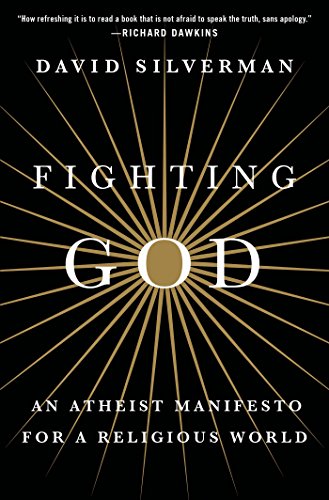
Fighting God: An Atheist Manifesto for a Religious World by David Silverman - Fighting God is a firebrand manifesto from one of the most recognizable faces of atheism. In his book, Silverman -- a walking, talking atheist billboard known for his appearances on Fox News -- discusses the effectiveness, ethics and impact of the in-your-face-atheist who refuses to be silent. Silverman argues that religion is more than just wrong: it is malevolent and does not deserve our respect. It is our duty to be outspoken and do what we can to bring religion down. Examining the mentality, methods and issues facing the firebrand atheist, Silverman presents an overwhelming argument for firebrand atheism and reveals: - All religion is cafeteria religion and almost all agnostics are atheists. - American society grants religion a privileged status, despite the intentions of the Founding Fathers. - Christian politicians have adversely (and un-Constitutionally) affected our society with regard to science, health, women's rights, and gay rights. - The notion of 'atheist Jews' is a lie forced on us by religion. - It is not 'Islamophobia' to observe dangerous teachings and disproportionate violence in Islam. - Atheists are slowly but surely winning the battle. Fighting God is a provocative, unapologetic book that takes religion to task and will give inspiration to non-believers and serve as the ultimate answer to apologists.

Imagine There's No Heaven: How Atheism Helped Create the Modern World by Mitchell Stephens - The historical achievements of religious belief have been large and well chronicled. But what about the accomplishments of those who have challenged religion? Traveling from classical Greece to twenty-first century America, Imagine There's No Heaven explores the role of disbelief in shaping Western civilization. At each juncture common themes emerge: by questioning the role of gods in the heavens or the role of a God in creating man on earth, nonbelievers help move science forward. By challenging the divine right of monarchs and the strictures of holy books, nonbelievers, including Jean- Jacques Rousseau and Denis Diderot, help expand human liberties, and influence the early founding of the United States. Revolutions in science, in politics, in philosophy, in art, and in psychology have been led, on multiple occasions, by those who are free of the constraints of religious life. Mitchell Stephens tells the often-courageous tales of history's most important atheists-- like Denis Diderot and Salman Rushdie. Stephens makes a strong and original case for their importance not only to today's New Atheist movement but to the way many of us--believers and nonbelievers--now think and live.

Seven Types of Atheism by John Gray - For a generation now, public debate has been corroded by a shrill, narrow derision of religion in the name of an often vaguely understood "science." John Gray's stimulating and enjoyable new book, Seven Types of Atheism, describes the complex, dynamic world of older atheisms, a tradition that is, he writes, in many ways intertwined with and as rich as religion itself.
Along a spectrum that ranges from the convictions of "God-haters" like the Marquis de Sade to the mysticism of Arthur Schopenhauer, from Bertrand Russell's search for truth in mathematics to secular political religions like Jacobinism and Nazism, Gray explores the various ways great minds have attempted to understand the questions of salvation, purpose, progress, and evil. The result is a book that sheds an extraordinary light on what it is to be human.

Village Atheists: How America's Unbelievers Made Their Way in a Godly Nation by Leigh Eric Schmidt - Leigh Eric Schmidt rebuilds the history of American secularism from the ground up, giving flesh and blood to these outspoken infidels, including itinerant lecturer Samuel Porter Putnam; rough-edged cartoonist Watson Heston; convicted blasphemer Charles B. Reynolds; and atheist sex reformer Elmina D. Slenker. He describes their everyday confrontations with devout neighbors and evangelical ministers, their strained efforts at civility alongside their urge to ridicule and offend their Christian compatriots. Schmidt examines the multilayered world of social exclusion, legal jeopardy, yet also civic acceptance in which American atheists and secularists lived. He shows how it was only in the middle decades of the twentieth century that nonbelievers attained a measure of legal vindication, yet even then they often found themselves marginalized on the edges of a God-trusting, Bible-believing nation. Village Atheists reveals how the secularist vision for the United States proved to be anything but triumphant and age-defining for a country where faith and citizenship were--and still are--routinely interwoven.